
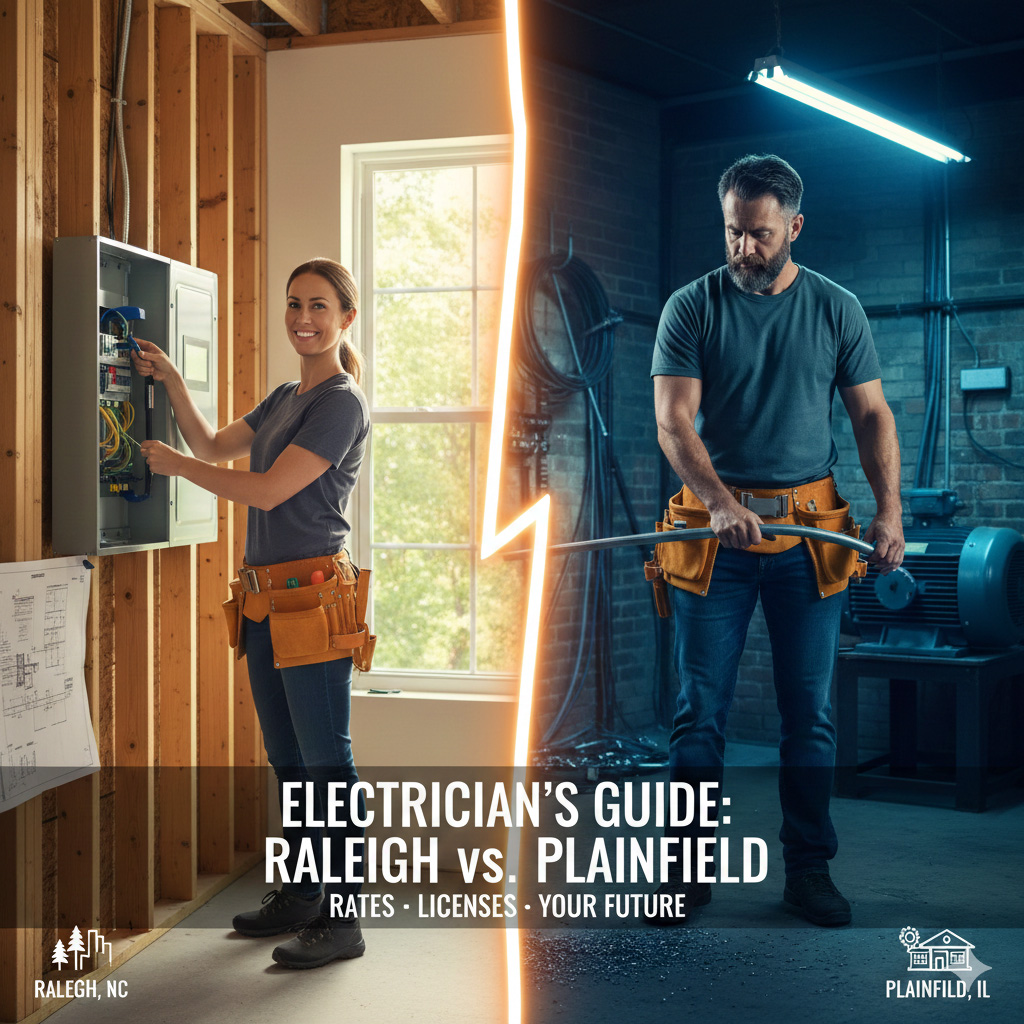
So, you’re thinking about picking up the snips and joining the ranks of the “sparkies”? That is a fantastic choice. Whether you’re in the rolling hills of North Carolina or the sprawling plains of Illinois, the world always needs people who can keep the lights on without blowing a fuse.
But here’s the thing: depending on where you stand, the “rules of the game” change completely. If you’re looking at Raleigh, NC versus Plainfield, IL, you aren’t just comparing two different cities; you’re comparing two entirely different legal philosophies.
Let’s break it down so you can decide where your toolbelt belongs.
1. The Big Picture: State vs. Local
The first thing a beginner needs to know is who “owns” your license.
- In Raleigh (North Carolina): The state is the boss. You deal with the North Carolina State Board of Examiners of Electrical Contractors (NCBEEC). Once you have a state license, it’s a golden ticket that is generally recognized across the whole state.
- In Plainfield (Illinois): Illinois is the “Wild West” of licensing. There is no statewide license. Instead, every municipality (like Plainfield or Chicago) sets its own rules. To work in Plainfield, you usually need a license from a “testing city” (like Joliet or Elgin) that Plainfield recognizes, or you must meet their specific local registration requirements.
2. Show Me the Money: Rates and Costs
Before you sweat for it, you want to know what it’s worth. Illinois generally has a higher “ceiling” for pay, but North Carolina offers a very steady, growing market with a lower barrier to entry for business owners.
Financial Comparison Table (2026 Estimates)
| Feature | Raleigh, North Carolina | Plainfield, Illinois |
| Entry-Level (Apprentice) Rate | $18.00 – $24.00 / hr | $20.00 – $26.00 / hr |
| Journeyman / Mid-Level Rate | $28.00 – $34.00 / hr | $32.00 – $42.00 / hr |
| Master / Owner Rate | $45.00+ / hr | $50.00+ / hr |
| Initial Exam Fee | $125.00 | $100.00 – $150.00 (Varies by city) |
| License Fee (Annual) | $100 – $200 (Based on class) | $120.00 – $150.00 |
3. The Path to Power: How to Get Licensed
Getting your license isn’t just about passing a test; it’s about proving you’ve put in the “hours in the attic.”
Raleigh, NC: The “Classification” System
North Carolina uses a tiered system based on the dollar value of the projects you want to take on. It’s actually quite beginner-friendly because you can start small.
- Limited License: Projects up to $60,000. Requires 4 years (8,000 hours) of experience.
- Intermediate License: Projects up to $150,000. Requires 6 years of experience.
- Unlimited License: No project limit. Requires 7 years of experience and a “Statement of Bonding Ability.”
Plainfield, IL: The “Reciprocity” Hustle
Since Plainfield doesn’t issue its own “Master Electrician” exam from scratch, you usually go to a nearby city that does (like Joliet), pass their exam, and then “register” that license with the Village of Plainfield.
- Experience: Most local boards require 4 to 5 years (8,000 hours) of documented work under a licensed professional.
- The Exam: Usually based on the NEC (National Electrical Code). In Illinois, being a “Supervising Electrician” is the goal if you want to pull permits and run your own crew.
4. Beginner’s Cheat Sheet: Which one is for you?
Why you’ll love Raleigh:
- Uniformity: You don’t have to learn new rules every time you drive 20 minutes to a different town.
- Growth: Raleigh is a tech and construction hub; there is zero shortage of new houses needing panels.
- Reciprocity: A North Carolina license is often recognized in states like South Carolina and Virginia.
Why you’ll love Plainfield:
- Higher Wages: Proximity to Chicago generally pushes hourly rates higher than the national average.
- Local Community: You deal directly with the Village Building Department. It’s smaller, and once they know your face and your work quality, inspections go smoother.
- Union Presence: The IBEW (International Brotherhood of Electrical Workers) is very strong in Northern Illinois, offering incredible benefits and structured apprenticeship pay.
5. Comparison Summary
| Requirement | Raleigh (NC State Board) | Plainfield (Municipal/Local) |
| Experience Req. | 4–7 Years (depending on level) | 4–5 Years typically |
| State Exam? | Yes, Mandatory | No (Local city exams instead) |
| Continuing Ed? | 10 hours per year | Varies (often required locally) |
| Permit Authority | State-licensed individuals | Registered contractors with the Village |
The Human Reality
Starting out as an electrician is a bit like being a professional problem solver who happens to use pliers. In Raleigh, you’ll find yourself working in a lot of “stick-built” residential new construction and high-tech commercial spaces. In Plainfield, you’ll deal with a mix of newer suburban developments and older industrial “heavy-pipe” work that requires a lot of conduit bending skills.
If you like a clear, state-mandated career path, head to the Research Triangle. If you like the idea of high-stakes, high-pay work and don’t mind navigating local bureaucracy, Chicagoland is waiting for you.